
Best Pickup and Bass Cajons (2026): Electric Cajons for the Stage
Pickup and bass cajons compared on Meinl's listings: PSC100B, PWCP100MB and PJC50B with built-in piezo pickups, and the SUBCAJ5WN and Backbeat bass boxes.

Affiliate disclosure: product links on this page go to Amazon or to the maker's own store. As an Amazon Associate we earn from qualifying purchases, at no extra cost to you; links to makers' own stores earn us nothing. No retailer or brand sees our picks before they are published or has any say in them. How we choose.
A pickup cajon has microphones of a kind built in: piezo pickups inside the box turn the front plate's vibration into a signal you can send to an amplifier or PA, so the cajon keeps up with an amplified band without a separate microphone. A bass cajon goes the other way, with a bigger body and ports that push out a deeper low end for acoustic sets.
Meinl's PSC100B is our pick: its listing gives three passive piezo pickups that need no batteries, one quarter inch output, volume and tone dials and a link jack, in a full size Baltic birch body with two sets of steel snare wires.
Our top picks at a glance
- Meinl PSC100B Snarecraft Pickup Cajon
Pickups: 3 passive piezo · Inside: Steel snare wires · Size (W x H x D): 11.75 x 19 x 11.75 in · Warranty: 2 years
- Meinl PWCP100MB Woodcraft Professional Pickup String Cajon
Pickups: 3 passive piezo · Inside: Coiled cajon strings · Size (W x H x D): 11.75 x 19.75 x 12 in · Warranty: 2 years
- Meinl PJC50B Compact Pickup Cajon
Pickups: 3 passive piezo · Inside: Snare wires · Size (W x H x D): 10.25 x 15 x 10.25 in · Warranty: 2 years
- Meinl SUBCAJ5WN Jumbo Bass Subwoofer Cajon
Pickups: None · Inside: Steel snare wires · Size (W x H x D): 13.5 x 19.75 x 13.25 in · Warranty: 2 years
5. Bass cajon with adjustable strings
Meinl BBCAJNL Backbeat Bass CajonPickups: None · Inside: Adjustable cajon strings · Size (W x H x D): 11.75 x 19.5 x 11.75 in · Warranty: 2 years
| Pick | Pickups | Inside | Size (W x H x D) | Warranty | Buy |
|---|---|---|---|---|---|
| Meinl PSC100B Snarecraft Pickup CajonBest pickup cajon | 3 passive piezo | Steel snare wires | 11.75 x 19 x 11.75 in | 2 years | Amazon |
| Meinl PWCP100MB Woodcraft Professional Pickup String CajonBest pickup string cajon | 3 passive piezo | Coiled cajon strings | 11.75 x 19.75 x 12 in | 2 years | Amazon |
| Meinl PJC50B Compact Pickup CajonCompact pickup cajon | 3 passive piezo | Snare wires | 10.25 x 15 x 10.25 in | 2 years | Amazon |
| Meinl SUBCAJ5WN Jumbo Bass Subwoofer CajonBest bass cajon | None | Steel snare wires | 13.5 x 19.75 x 13.25 in | 2 years | Amazon |
| Meinl BBCAJNL Backbeat Bass CajonBass cajon with adjustable strings | None | Adjustable cajon strings | 11.75 x 19.5 x 11.75 in | 2 years | Amazon |
Best pickup cajon
Meinl PSC100B Snarecraft Pickup Cajon
A full size snare cajon with three battery-free pickups and tone control.
- Pickups
- 3 passive piezo
- Inside
- Steel snare wires
- Size (W x H x D)
- 11.75 x 19 x 11.75 in
- Warranty
- 2 years
Pros
- No batteries needed (per the listing)
- Volume and tone dials, output and link jacks
- Plays acoustically too
Cons
- Cable not included
- Snare wires are fixed
The PSC100B's listing describes three piezo pickups, two on the snare zones and one on the bass area, with a volume dial, a tone dial that leans the signal toward bass or snare, a quarter inch output and a link jack that joins other Meinl passive pickup instruments.
The pickups are passive, so there is no battery to run flat mid-set, and the cajon plays normally with nothing plugged in. The body is Baltic birch, 11.75 by 19 by 11.75 inches and about 9 pounds per the listing text, with two fixed sets of coiled steel snare wires. Meinl gives a 2 year warranty.
You need your own quarter inch instrument cable, and the snare buzz is always on, as on Meinl's acoustic snare boxes.
Best pickup string cajon
Meinl PWCP100MB Woodcraft Professional Pickup String Cajon
The same pickup system with guitar-style strings and a Makah burl front.
- Pickups
- 3 passive piezo
- Inside
- Coiled cajon strings
- Size (W x H x D)
- 11.75 x 19.75 x 12 in
- Warranty
- 2 years
Pros
- Strings for a smoother buzz
- Same volume, tone, output and link controls
- Makah burl front plate (per the listing)
Cons
- Listing's weight figures disagree (9 lb in the text, 12.5 lb in the specs)
- Cable not included
Meinl's Woodcraft Professional pickup cajon pairs the three-pickup, two-dial system with two fixed sets of micro-coiled steel cajon strings instead of snare wires, a Makah burl front plate and a Baltic birch body, 11.75 by 19.75 by 12 inches.
Two pickups sit near the strings and one on the bass area, per the listing. The text gives 9 pounds while the spec table gives 12.5, so expect something in that range. Choose it over the PSC100B if you prefer the softer string buzz.
Compact pickup cajon
Meinl PJC50B Compact Pickup Cajon
A shorter 15 inch pickup cajon for small stages and travel.
- Pickups
- 3 passive piezo
- Inside
- Snare wires
- Size (W x H x D)
- 10.25 x 15 x 10.25 in
- Warranty
- 2 years
Pros
- Smaller body (about 38 cm tall per the listing)
- Three pickups and side controls
- Fixed snare for a crisp slap
Cons
- Listing notes it is an international product, so labeling may differ
- Cable not included
The PJC50B puts three passive piezo pickups and a 6.3 mm jack (the same as a quarter inch jack) into a compact Baltic birch cajon made in Europe, about 15 inches tall per the listing's size field, with two fixed snare wire sets resting on the back of the front plate.
The listing notes that it is an international product whose labeling or instructions may differ from the US version. It suits a player who wants an amplified cajon that fits in a car with room to spare.
Best bass cajon
Meinl SUBCAJ5WN Jumbo Bass Subwoofer Cajon
A jumbo cajon with front ports for a deep, subwoofer-like low end.
- Pickups
- None
- Inside
- Steel snare wires
- Size (W x H x D)
- 13.5 x 19.75 x 13.25 in
- Warranty
- 2 years
Pros
- Internal bass reflex channels and front ports (per the listing)
- Walnut front plate
- Bigger, more comfortable seat
Cons
- About 17 pounds per the listing text
- No pickups
Meinl's Jumbo Bass Subwoofer cajon uses a bigger body with internal bass reflex channels and forward-facing sound ports for what the listing calls a subwoofer-like bass, with a walnut front plate and two fixed sets of steel snare wires.
The listing text gives 13.5 by 19.75 by 13.25 inches and 17 pounds. That makes it the heaviest box here and the widest seat. It is acoustic only, aimed at acoustic gigs, worship and recording where a bigger bass note matters.
It fits Meinl's own large cajon bag, the MCJB-L, which the bag listing names for this model.
Bass cajon with adjustable strings
Meinl BBCAJNL Backbeat Bass Cajon
A ported bass box whose string tension you can set.
- Pickups
- None
- Inside
- Adjustable cajon strings
- Size (W x H x D)
- 11.75 x 19.5 x 11.75 in
- Warranty
- 2 years
Pros
- Ported sound hole for extra bass (per the listing)
- Strings adjust with the included hex key
- Standard footprint
Cons
- Weight figures differ (11 lb in the text, 14.7 lb in the specs)
- No pickups
Meinl's Backbeat Bass cajon adds a permanently fitted port to a standard size box, 11.75 by 19.5 by 11.75 inches, with a hardwood front plate, a composite body and two sets of adjustable micro-coiled steel strings set with the hex key in the box.
It suits a player who wants more low end than a standard cajon without the jumbo body of the SUBCAJ5WN, and who wants to set the string tension.
How a pickup cajon connects
Meinl's pickup cajons use passive piezo pickups, so no battery or power supply is involved: you run a quarter inch instrument cable from the cajon's output to an amplifier, a PA mixer or a DI box and set the cajon's own volume and tone dials. On the PSC100B and PWCP100MB the tone dial shifts the balance between bass and snare, and a link jack joins other Meinl passive pickup instruments into the same output, per the listings.
| Cajon | Pickups | Inside | Weight (listing text) |
|---|---|---|---|
| Meinl PSC100B | 3 passive piezo | Fixed snare wires | About 9 lb |
| Meinl PWCP100MB | 3 passive piezo | Fixed cajon strings | About 9 lb (specs say 12.5) |
| Meinl PJC50B | 3 passive piezo | Fixed snare wires | Not given in the text |
| Meinl SUBCAJ5WN | None | Fixed snare wires | About 17 lb |
| Meinl BBCAJNL | None | Adjustable strings | About 11 lb (specs say 14.7) |
Pickups or a microphone
A pickup keeps the signal clean on a loud stage because it hears the box, not the room, and it never moves. A microphone in front of the cajon captures more of its natural sound but picks up other instruments too (our reading). Every pickup cajon here still plays as a normal acoustic cajon with nothing plugged in, so it also works at an unplugged jam.
Setting the dials
Meinl describes the volume dial as setting your level and the tone dial as adjusting for more bass or more snare. A sensible start is the cajon's volume at about halfway with the mixer channel set from there, then the tone dial nudged until the bass note and the slap sit evenly in the room (our reading). Set the snare or strings first with the cajon unplugged, since the pickups amplify whatever buzz the box already has.
Linking instruments
The link jack on the PSC100B and PWCP100MB joins other Meinl Percussion passive pickup instruments through the cajon's system, per the listings, so a second pickup instrument can share the cajon's single output to the PA. That saves a mixer channel on a small stage.
Care
Schlagwerk says a cajon needs no special care and no oils on its surfaces, and Latin Percussion warns that fast temperature swings can make wooden shells expand, contract or crack. A pickup cajon is still a wooden box; keep it out of a cold car between gigs.
When a bass cajon makes sense
Ports and a bigger body push out more low end acoustically. That helps when you play without amplification in a group, where a standard box's bass note can get lost. The cost is weight and size: the SUBCAJ5WN is the biggest box on this page. A pickup cajon solves the same problem on stage by turning the bass up through the PA.
What we would buy
The Meinl PSC100B for most players who play through a PA, the PWCP100MB if you want strings, and the SUBCAJ5WN for acoustic sets that need more bass. For a box that is easy to carry, see the travel cajon guide; for a standard acoustic box, the cajon guide.
Frequently asked questions
Do pickup cajons need batteries?
Meinl's pickup cajons here use passive piezo pickups that need no batteries, per the listings. You plug a quarter inch instrument cable into an amplifier or PA and set the dials.
Can I play a pickup cajon without an amp?
Yes. Meinl's listings say the cajons play normally without using the pickups, so the same box works acoustically at home or at an unplugged session.
What cable does a pickup cajon need?
A standard quarter inch instrument cable, the kind used for electric guitars. Meinl does not include one with these cajons, per the listings.
What makes a bass cajon different?
A bigger body and ports. Meinl's SUBCAJ5WN uses internal bass reflex channels and front sound ports for a deeper, subwoofer-like low end, and its Backbeat model adds a fitted port.
Is a bass cajon heavier?
Usually. The SUBCAJ5WN listing gives 17 pounds against about 7 pounds for Meinl's standard BC1, and its body is 13.5 inches wide instead of 12.
What bag fits a jumbo bass cajon?
Meinl's MCJB-L large cajon bag names the SUBCAJ5WN in its listing and gives a largest recommended cajon of 17 by 23.5 by 15 inches.
Sources
- FAQ: Frequently Asked Questions, Schlagwerk
- Frequently Asked Questions, Latin Percussion
- How to Care for Your Drums, Yamaha
Related guides
Best Cajon and Djembe Bags (2026): Padded Bags Sized to the Drum
Meinl's MCJB-L is our pick for a large cajon: 600D polyester, padding all round, rubber pads underneath, and room for a box up to 17 by 23.5 by 15 inches.
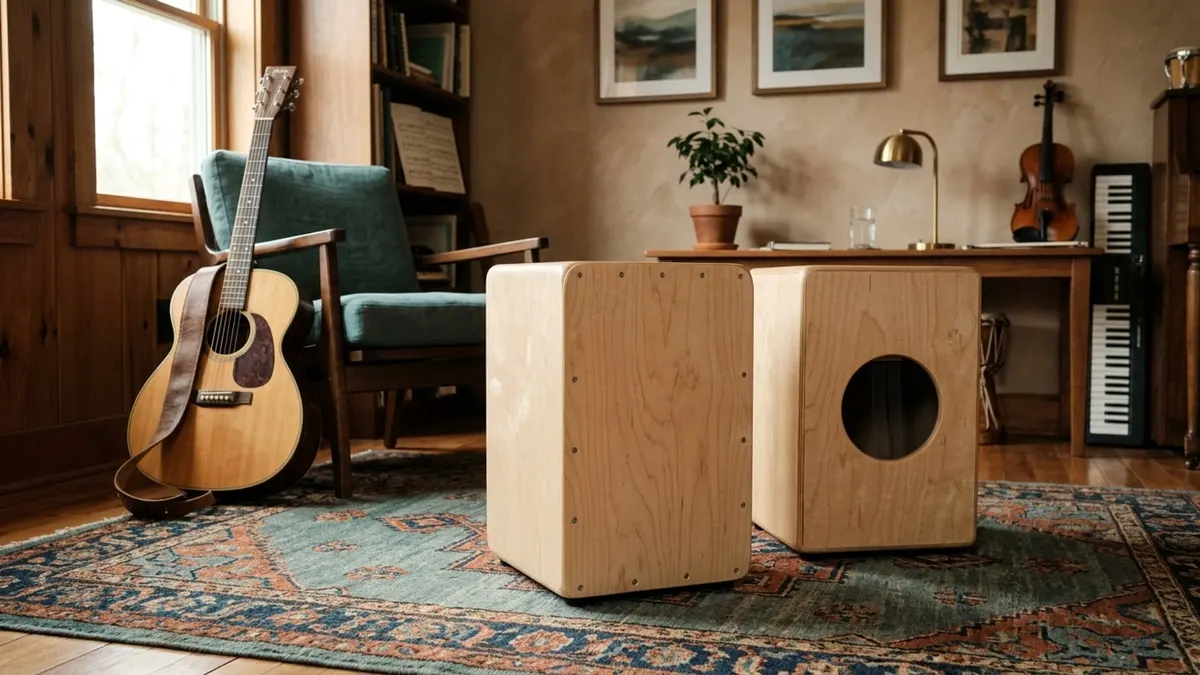
Best Cajons (2026): Snare and String Box Drums for Beginners and Players
Meinl's BC1 is our pick: a 12 by 17.25 inch Baltic birch box with two sets of steel snare wires, a rear sound port and a 2 year warranty.

Best Travel Cajons (2026): Compact and Strap-On Box Drums
Meinl's JC50LBNT is our pick for a compact sit-on cajon: 10.25 by 15 inches, Baltic birch, a 4 inch rear port and two sets of snare wires, at about 6 pounds.