
How to Tune Congas and Bongos: The Makers' Method, Step by Step
How to tune congas and bongos from Toca's and Latin Percussion's own instructions: half turns around the drum, a fourth between congas, an octave between bongos.

Affiliate disclosure: product links on this page go to Amazon or to the maker's own store. As an Amazon Associate we earn from qualifying purchases, at no extra cost to you; links to makers' own stores earn us nothing. No retailer or brand sees our picks before they are published or has any say in them. How we choose.
Congas and bongos with metal hardware tune the same way: a wrench turns the nuts on the tension rods, which pull the rim down and tighten the head. The skill is doing it evenly. Toca and Latin Percussion both publish instructions, and they agree on the method; where their suggested notes differ, both are given below.
What you need
- The tuning wrench that came with the drums.
- A chromatic tuner or tuner app if you want to land on named notes.
- A little lug lube if the nuts squeak, as Toca suggests.
- A few quiet minutes, since you need to hear small changes.
Step by step
- Start at the tension rod nearest the maker's logo, so you remember where you began. Toca uses its logo for this.
- Give each nut one half turn to tighten, moving around the drum in order until you have been all the way round once.
- Look at the collar of the head, the part that wraps over the edge, and check that it looks even all round. Uneven collar means uneven tension.
- Play an open tone and repeat the half turns until you reach the pitch you want. If the head is very loose, Toca says more than a half turn is fine at first.
- Tune on the stand or in the position you will play in. Toca notes that a conga's pitch rises when you move it from the floor to a stand.
Toca warns that a skin head is never perfectly even, since the skin can be heavier on one side than the other, so the drum will never be perfectly in tune with itself. Get it close and trust your ears.
How high to tune
Toca says congas should be tuned to the middle of their range for the best tone and volume, and gives a range for each size. Latin Percussion says most players tune the lower conga a fourth below the higher one, which you can check by playing the opening of Here Comes the Bride, comparing the tones with the higher drum tilted forward.
| Drum | Source | Suggested range |
|---|---|---|
| Quinto, 9.5 to 10.5 in | Toca | D to the A above |
| Conga, 10.5 to 11.5 in | Toca | C to the E above |
| Tumba, 11.5 to 13 in | Toca | A to the B above |
| Two congas | Latin Percussion | Lower drum a fourth below the higher |
| Bongo hembra | Latin Percussion | Between the C and the F below middle C |
| Bongo macho | Latin Percussion | Between the D above middle C and the C above that |
| Bongos | Toca | As close to an octave apart as possible; macho B to D and hembra A, two octaves above middle C |
The two bongo suggestions sit far apart, which is a reminder that, as LP puts it, intervals vary greatly from player to player and style to style. The tuning chart works out the second drum's note from the first.
Tuning to a named note
- Clip a tuner to the rim or hold a phone tuner app near the drum.
- Play a clear open tone, not a slap, which is too noisy for a tuner to read.
- Bring the higher drum near its target first, then tune the lower drum from it: a fourth below for congas (LP), about an octave below for bongos (Toca).
- Check each tension rod by tapping lightly over it; a spot that sounds higher or lower than the rest needs a small turn.
Tuning a skin head to an exact note is rarely possible, as Toca explains, so land within a few cents and stop. Humidity will move it again by the next session, which is why players retune before they play rather than once a month (our reading). Remo's advice for its synthetic djembe heads, tapping over each tuning point and matching the pitch all round, works on congas and bongos too.
Squeaks and stiff nuts
Toca says tension rods squeak when the lubricant between the nuts and washers dries up, and recommends lug lube. A drop on each rod makes small, even turns easier, which is the whole point of the method.
After playing
Toca recommends loosening each nut a half turn after playing, going round the drum twice, to lengthen the life of the heads. It also suggests rubbing a small amount of hand lotion with lanolin into a skin head once it is tuned, since the soaking during mounting removes some of the skin's oils, and a chamois cloth to keep fingerprints off the shell.
Fitting a new rawhide head
Latin Percussion says new rawhide heads are made shallow for longevity and may need to be filled halfway with lukewarm water for 30 minutes to soften before fitting. Toca's method for a new bison head is to turn it upside down, fill it with half an inch of cold water for two to three hours, fit it and tighten until there is no valley on top, let it sit overnight, then tune. LP adds that the correct replacement head part number is usually written inside the drum.
Storage
Latin Percussion recommends cases or soft bags for transport and storage, covers for drums left set up, and keeping drums out of damp or cold places; it warns that fast temperature swings can make shells expand, contract, warp or crack. Its rule of thumb: drums are comfortable where you are comfortable.
For the drums themselves, see the conga guide and bongo guide.
Frequently asked questions
How do you tune congas?
Toca's method is half a turn on each nut, going all the way round the drum, checking the head's collar for even tension, and repeating until the drum reaches the middle of its range.
What notes should congas be tuned to?
Toca suggests the quinto from D to the A above, the conga from C to the E above and the tumba from A to the B above. LP says most players tune the lower drum a fourth below the higher.
How far apart should bongos be tuned?
Toca says as close to an octave apart as possible. Latin Percussion suggests the hembra between the C and F below middle C and the macho between the D above middle C and the C above that.
Should I loosen my congas after playing?
Toca recommends loosening each nut a half turn after playing, going round the drum twice, to help the heads last longer.
How do I fit a new rawhide conga head?
Latin Percussion says to soften it by filling it halfway with lukewarm water for 30 minutes; Toca soaks a bison head with half an inch of cold water for two to three hours, then fits it and lets it sit overnight.
Why can't I get my conga perfectly in tune?
Toca explains that a skin head is not perfectly even like a plastic head, so the drum will never be perfectly tuned. Aim for even tension and a clear tone.
Sources
- Tips and Advice: tuning and maintenance of congas, bongos, timbales and djembes, Toca Percussion
- Frequently Asked Questions, Latin Percussion
- How to Care for Your Drums, Yamaha
Related guides
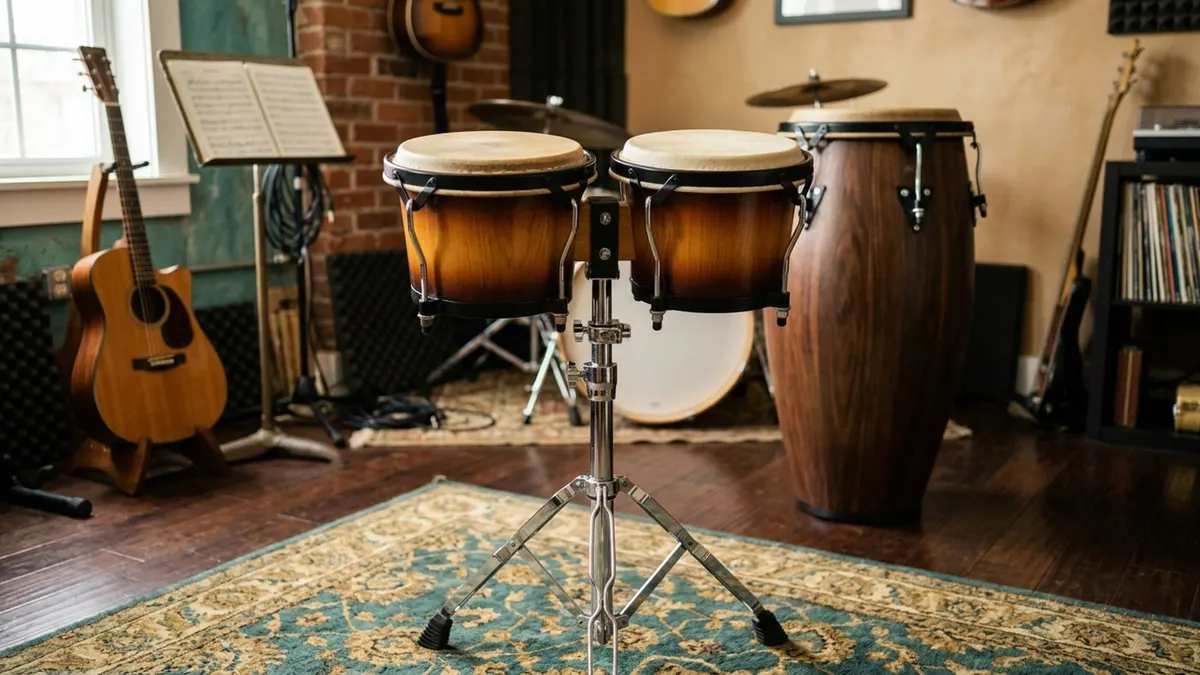
Best Bongos (2026): Wood and Synthetic Pairs Compared
Meinl's HB100VSB is our pick: 6.75 and 8 inch buffalo rawhide heads on solid hardwood staves, a tuning wrench and a 2 year warranty.
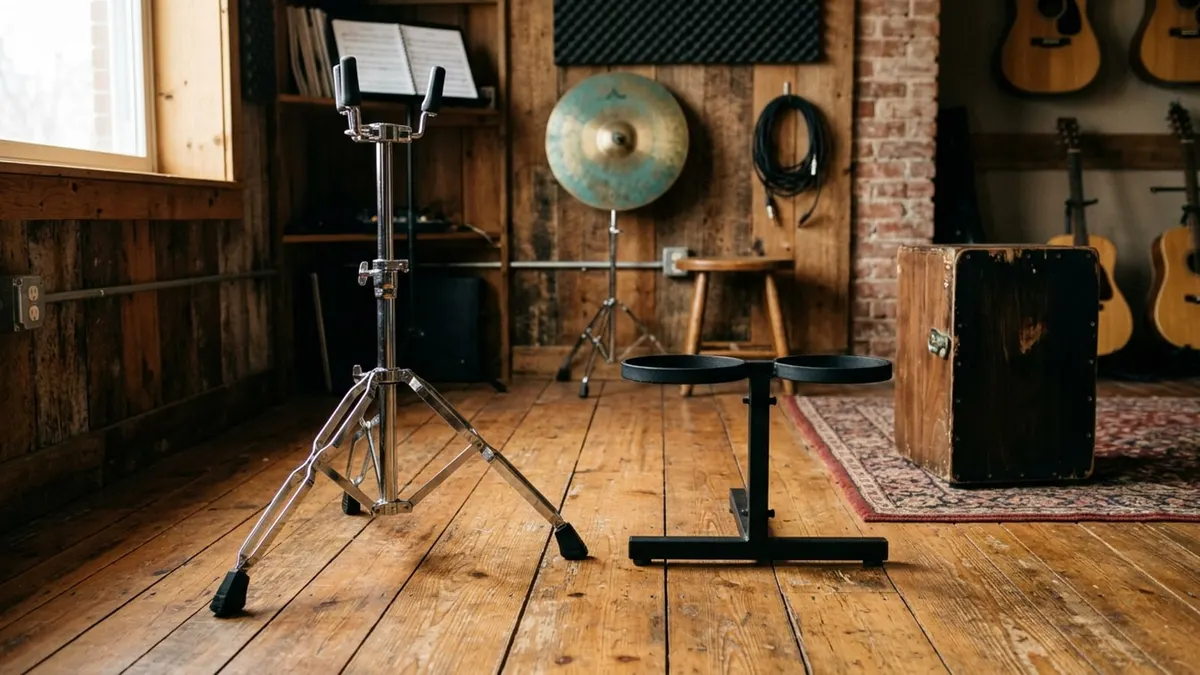
Best Conga and Bongo Stands (2026): Standing and Seated Heights
Gibraltar's 9517 is our pick for a pair of congas: double braced, 25 to 42 inches tall, adjustable shell supports for 11 to 12.5 inch drums and a 5 year warranty.
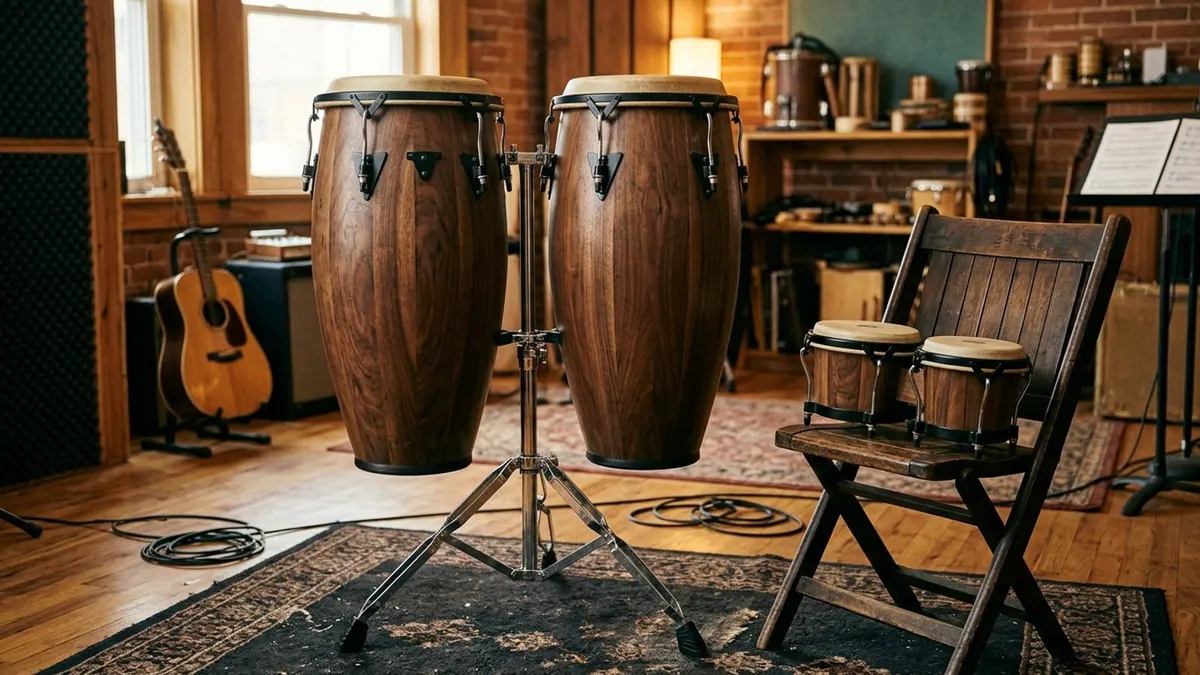
Best Congas (2026): Conga Sets With Stands, From First Pair to Stage
LP's Discovery II is our pick for a first pair: 10 and 11 inch rawhide heads on 28 inch ultralight shells, EZ Curve rims and a light double stand in the box.