
Bongos vs Congas: Size, Sound, Tuning and Which to Buy First
Bongos vs congas from LP's and Toca's own figures: head sizes, heights, how far apart each pair is tuned, how you play them, and which suits a first purchase.

Affiliate disclosure: product links on this page go to Amazon or to the maker's own store. As an Amazon Associate we earn from qualifying purchases, at no extra cost to you; links to makers' own stores earn us nothing. No retailer or brand sees our picks before they are published or has any say in them. How we choose.
Bongos and congas are both Cuban hand drums with rawhide heads, and both are usually played as a pair, but they are different instruments in size, voice and the way you play them. This page sets them side by side using the makers' own figures from Latin Percussion and Toca, then says which to buy first.
Size
Bongos are two small drums joined by a center block. LP's chart gives City bongos at 6 and 7 inches and Aspire at 6.75 and 8; LP's Matador uses 7.25 and 8.625; Meinl's listings give 6.5 and 7.5 or 6.75 and 8 inches. Congas are separate tall drums. Toca gives 28 to 30 inches of height and head diameters from about 9.5 inches for the quinto to 13 inches for the tumba.
| Bongos | Congas | |
|---|---|---|
| Heads | About 6 to 8.6 in, a joined pair | About 9.5 to 13 in, separate drums |
| Height | About 7 in (Meinl HB50 listing) | 28 to 30 in (Toca) |
| Gap between the pair | About an octave (Toca) | About a fourth (LP) |
| How played | Between the knees or on a stand | Standing, or seated with the drum tilted |
| Weight of a pair | About 4 to 13 lb (listings) | About 14 to 28 lb with stands (listings) |
Sound and role
Small heads tuned high give bongos a bright, cutting crack that sits above a band. Larger, deeper congas give a round, ringing tone and an open bass note that carry a groove (our reading). In Latin music the two often play together, with the bongos improvising on top and the congas holding the pattern underneath.
Shell material shifts the voice of either drum. Latin Percussion says oak tends to sound brighter and louder than mahogany, which is warmer and more mellow, and fiberglass louder and crisper; Meinl's synthetic bongos aim to keep the sound of wood while ignoring the weather.
Tuning
Toca says bongos should be pitched as close to an octave apart as possible, and suggests a thinner skin on the small drum. Latin Percussion gives a range for each drum: the hembra between the C and the F below middle C, and the macho between the D above middle C and the C above that. For congas, Latin Percussion says most players tune the lower drum a fourth below the higher one, and Toca gives a range for each size: the quinto from D to the A above, the conga from C to the E above and the tumba from A to the B above.
Both makers stress that tuning is a matter of taste and style, and Toca adds that a skin head is never perfectly even, so the drum will never be perfectly in tune with itself. The tuning chart gives the note for the second drum of either pair.
How you play them
Bongos are usually held between the knees while seated, or mounted on a stand. Meinl sells a low stand for players sitting on a cajon and notes that most bongo stands are made for standing height. Congas stand on the floor tilted toward you or sit on a stand; Toca notes that a conga's pitch rises when you move it from the floor to a stand, and LP suggests comparing the two drums' tones with the higher drum tilted forward.
Space and carrying
A pair of bongos fits in a bag and on a lap, and Eastar even sells its pair with a hard case. A pair of congas with a stand fills a corner and needs a car: LP's Discovery II set is about 13.6 pounds in the specs, its ultralight model, while the Meinl HC512 set is about 28 pounds. If space is tight, bongos win easily.
Build and price of entry
Both come in steps. LP's chart shows how its City and Aspire lines differ: Aspire uses better rawhide, thicker rims and tension rods, and steel bottoms where City has rubber, and the same steps apply to its congas and bongos. A pair of bongos at any level is a smaller purchase than a pair of congas at the same level, since there is far less drum (our reading).
Common first mistakes
- Tuning on the floor and playing on a stand. Toca notes that a conga's pitch rises on a stand, so tune where you play.
- Cranking one side. Toca's method is half a turn on each nut in turn, all the way round, watching the head's collar for even tension.
- Leaving drums in the car. Latin Percussion warns that fast temperature swings can make shells expand, contract or crack.
- Expecting a perfect tuning. Toca says a skin head is never perfectly even, so aim for a clear, even tone.
Playing them with a cajon
Many hand percussionists sit on a cajon with bongos in front of them. Meinl makes a seated bongo stand for exactly that, and a cajon gives the bass and snare that bongos lack. See the cajon guide and the stand guide.
Which to buy first
- Buy bongos if you want a small, portable drum, play mostly seated, or will join a group that already has a conga player. The Meinl HB100VSB is our pick.
- Buy congas if you want the grooves that drive Latin music, have room, and want a drum you can play standing. LP's Discovery II set includes a stand.
- For a child, a short set like Zenison's 14 inch congas or small bongos fits better than full size drums.
Full picks are in the bongo guide and the conga guide, with stands in the stand guide. Many players end up owning both, starting with whichever fits their space.
Care is the same
Both use rawhide heads on wood or synthetic shells. Toca recommends loosening the heads slightly after playing and rubbing a little lanolin hand lotion into skin heads after tuning; Latin Percussion recommends cases or bags, covers for drums left set up, and keeping drums away from damp, cold and fast temperature swings. The tuning guide covers both.
Frequently asked questions
Are bongos easier than congas?
Bongos are smaller and easier to carry and set up, but both take practice. Bongos suit seated play; congas suit players who stand and want deeper grooves.
What is the size difference between bongos and congas?
Bongo heads run about 6 to 8.6 inches on a joined pair; congas are separate drums about 28 to 30 inches tall with heads from about 9.5 to 13 inches, per Toca.
How are bongos tuned compared with congas?
Toca says bongos are pitched about an octave apart; Latin Percussion says most players tune the lower conga a fourth below the higher one.
Can a single player cover bongos and congas together?
Yes. Players often mount bongos on a stand beside their congas; a stand with a wide height range helps the two sit at a similar height.
Should a beginner buy bongos or congas?
Bongos if space or portability matters, or for seated play; congas if you want the drive of Latin grooves and have room for two tall drums on a stand.
Sources
- Frequently Asked Questions, Latin Percussion
- Tips and Advice: tuning and maintenance of congas, bongos, timbales and djembes, Toca Percussion
- Congas, Latin Percussion
Related guides
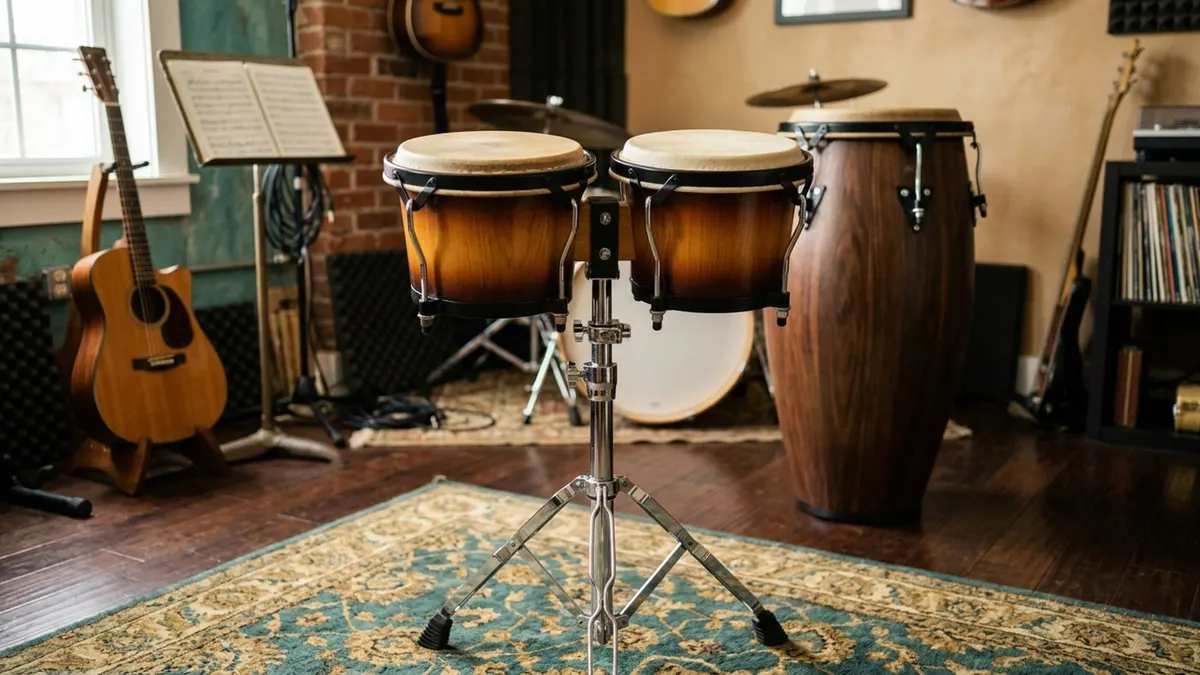
Best Bongos (2026): Wood and Synthetic Pairs Compared
Meinl's HB100VSB is our pick: 6.75 and 8 inch buffalo rawhide heads on solid hardwood staves, a tuning wrench and a 2 year warranty.
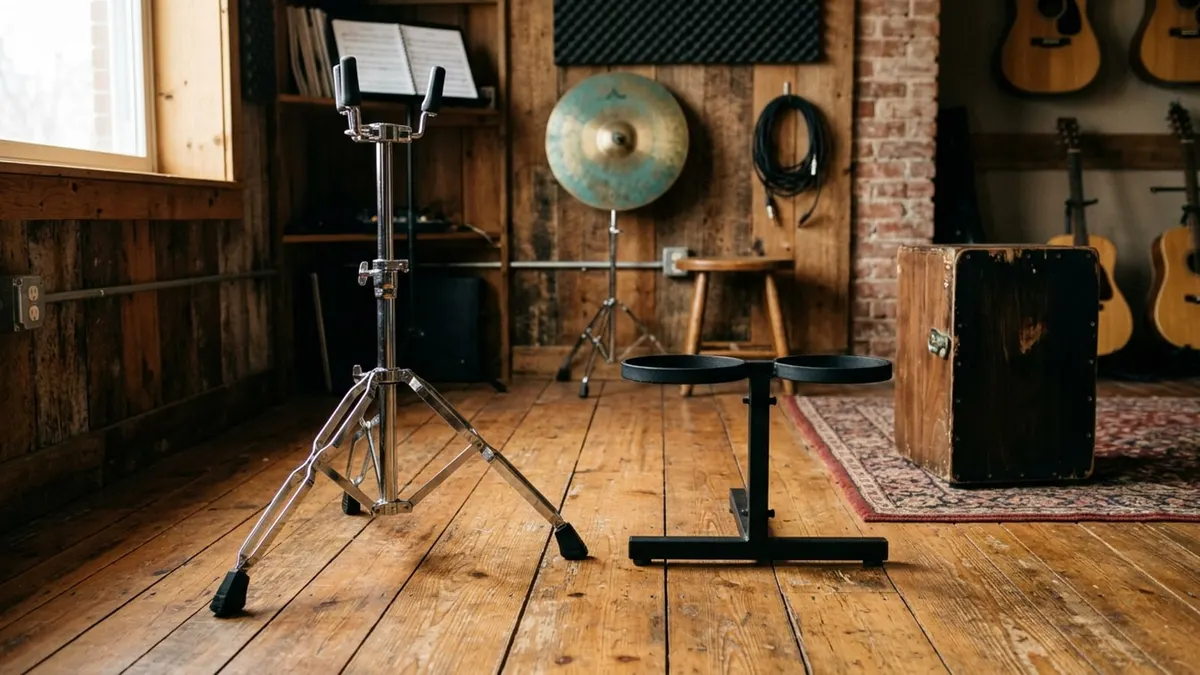
Best Conga and Bongo Stands (2026): Standing and Seated Heights
Gibraltar's 9517 is our pick for a pair of congas: double braced, 25 to 42 inches tall, adjustable shell supports for 11 to 12.5 inch drums and a 5 year warranty.
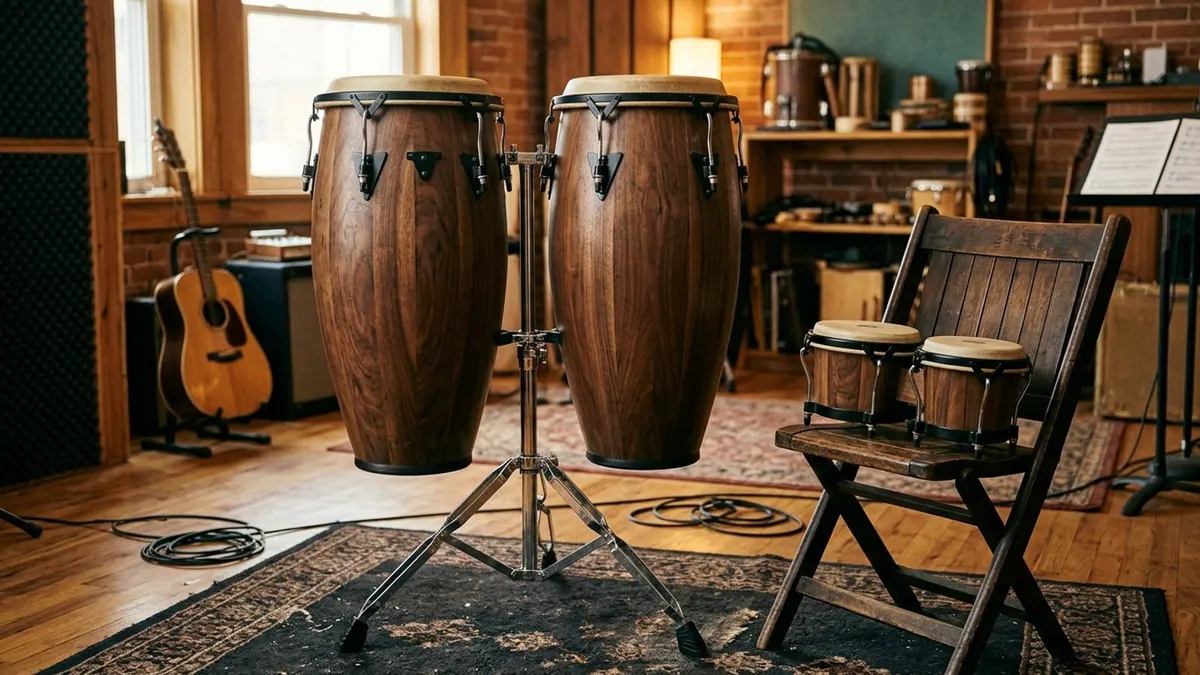
Best Congas (2026): Conga Sets With Stands, From First Pair to Stage
LP's Discovery II is our pick for a first pair: 10 and 11 inch rawhide heads on 28 inch ultralight shells, EZ Curve rims and a light double stand in the box.