
How to Adjust a Cajon: Snare Wires, Strings and the Top Corners
How to set a cajon's snare wires or strings and its top corner screws, from Schlagwerk's own advice: slight tension, no hum, and the factory setting as the base.

Affiliate disclosure: product links on this page go to Amazon or to the maker's own store. As an Amazon Associate we earn from qualifying purchases, at no extra cost to you; links to makers' own stores earn us nothing. No retailer or brand sees our picks before they are published or has any say in them. How we choose.
A cajon has two things you can adjust: the snare wires or strings inside, which set how much buzz the slap carries, and the screws along the top of the front plate, which set how sharp the corners sound. Not every cajon allows both. Schlagwerk, a German cajon maker, explains the adjustments for its own boxes, and its advice is the clearest starting point we found for any brand.
First, find out what your cajon has
Look inside through the sound port with a flashlight. Snare wires look like the coiled wires under a snare drum; strings look like guitar strings running up the back of the front plate. Then look underneath. String and adjustable snare cajons usually have screws or a knob on the bottom: Schlagwerk says its string cajons use two Allen screws there, and keeps the Allen key inside the sound hole.
- Fixed wires: Meinl lists its BC1 with two fixed sets of steel snare wires and names no adjustment, so the buzz is set at the factory.
- Adjustable wires: VEVOR's SN12-A1 adjusts its snare from the bottom with an included hex wrench, per its listing.
- Adjustable strings: Donner's EC1291 and Meinl's Backbeat Bass cajon adjust their strings with an included Allen or hex key, per their listings.
Setting the strings or snare
- Play a few slaps near the top corners and a few bass notes in the center to hear where it starts.
- Turn each bottom screw a small amount, the same amount on each side. VEVOR's listing says counterclockwise loosens and clockwise tightens on its boxes.
- Play again. Tighter strings press harder on the front plate and usually give a shorter, drier buzz; looser strings buzz more and longer.
- Stop as soon as you hear a hum or a constant rattle while playing. Schlagwerk says that means the strings are already too tight and should be loosened a bit.
Schlagwerk's own guide value is simple: the best snare sound comes from only slightly tensioned strings, and the screws should not be tightened too far. That runs against the instinct to crank them down for a cleaner sound, so go in small steps.
Turning the snare off
On a cajon with an adjuster, backing the strings away from the front plate takes most of the buzz out, which gives a drier bass for quiet songs. A fixed-wire cajon cannot do this; if you want both sounds, choose an adjustable box from the start. The cajon guide marks which picks adjust.
The top corner screws
Most cajons fix the front plate with screws along the top edge. Schlagwerk says the five screws there fine-tune the sound, but recommends keeping the factory setting as far as possible. Loosening a corner screw slightly lets that corner slap against the frame for a crisper, louder high note; tightening it gives a cleaner, more controlled tone.
- Note how far each screw sits before you touch it, so you can go back.
- Loosen one corner screw a quarter turn at most and play that corner.
- Match the other corner if you like the change, then leave the middle screws alone unless a buzz needs taming.
Schlagwerk adds that a slightly wavy front plate near the screws, and corners that stand out a little, are normal on cajons with partly screwed front plates, not a defect. Do not overtighten to flatten them: the play in the front plate is part of what gives the corners their slap, and Schlagwerk explains that a partly or fully screwed front plate is one of the ways each of its series gets its own sound.
Feet, floor and seat
Silicone or rubber feet stop a cajon from walking across the floor and keep floor rattles out of the sound; Meinl's listings say its feet suit wood, laminate, carpet, brick and concrete. If the cajon buzzes in a way you cannot trace to the strings, check that every foot is on and nothing is touching the box.
Adjusting a pickup cajon
A pickup cajon adds dials but the same rules apply to its strings. Meinl's pickup cajons have a tone dial that leans the amplified sound toward bass or snare, per the listings, so set the acoustic buzz first with the box unplugged and then shape the amplified sound with the dial. See the pickup cajon guide.
Care between sessions
Schlagwerk says a cajon needs no special care and no oils or care products on its surfaces. Latin Percussion's general drum advice still applies: keep wooden drums out of damp or cold places and away from fast temperature swings, which can make wood expand, contract or crack. A padded bag helps in transport.
When it needs a repair
A cracked front plate is not a home fix on most cajons. Latin Percussion says it does not sell replacement cajon faceplates, while Schlagwerk repairs its instruments, free within the legal warranty period, and sells spare parts for owners' own repairs in its online shop. Strings and snare units are a different matter: if one breaks, ask the maker for the part before buying a generic one, since the mounting differs between brands (our reading).
A quick check before you play out
- Every foot on and the box sitting flat.
- No hum or rattle when you play softly; if there is one, loosen the strings a touch.
- Corner screws where you left them.
- The key in the bag pocket, not in the house.
Frequently asked questions
How do I make my cajon snare louder?
Loosen the strings or snare slightly with the bottom adjuster so they press more lightly on the front plate, which usually gives more buzz. Schlagwerk says slight tension gives the best snare.
Why does my cajon hum when I play?
Schlagwerk says a hum while playing means the strings are already too tight. Loosen the bottom screws a little at a time until it stops.
Can I adjust a Meinl BC1 snare?
Meinl lists the BC1 with two fixed sets of steel snare wires and names no adjustment, so the snare buzz on that cajon is set at the factory.
Should I tighten all the screws on the front of my cajon?
No. Schlagwerk recommends keeping the factory setting of the top screws as far as possible and making only small changes at the corners to tune the slap.
Is a wavy cajon front plate a defect?
Schlagwerk says slight waviness near the screws and corners that stand out a little are normal on cajons with partly screwed front plates.
Where is the key to adjust my cajon?
It depends on the maker. Schlagwerk keeps the Allen key inside the sound hole; VEVOR and Donner include a hex or Allen wrench in the box, per their listings.
Sources
- FAQ: Frequently Asked Questions, Schlagwerk
- Frequently Asked Questions, Latin Percussion
- How to Care for Your Drums, Yamaha
Related guides
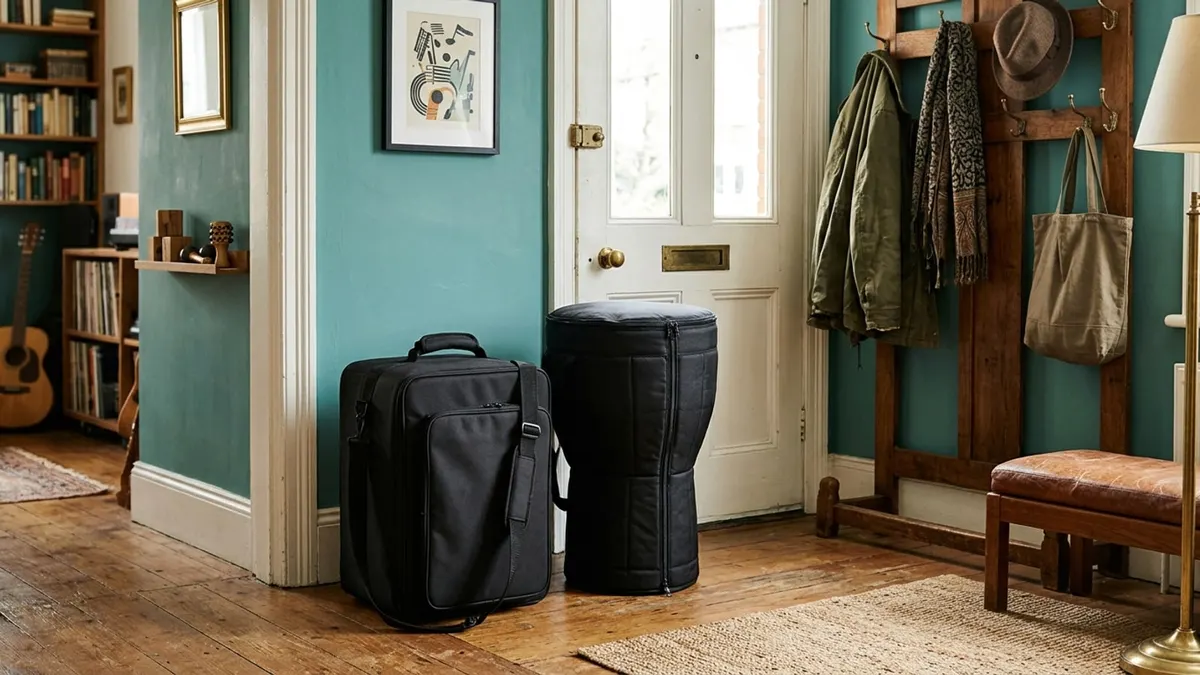
Best Cajon and Djembe Bags (2026): Padded Bags Sized to the Drum
Meinl's MCJB-L is our pick for a large cajon: 600D polyester, padding all round, rubber pads underneath, and room for a box up to 17 by 23.5 by 15 inches.
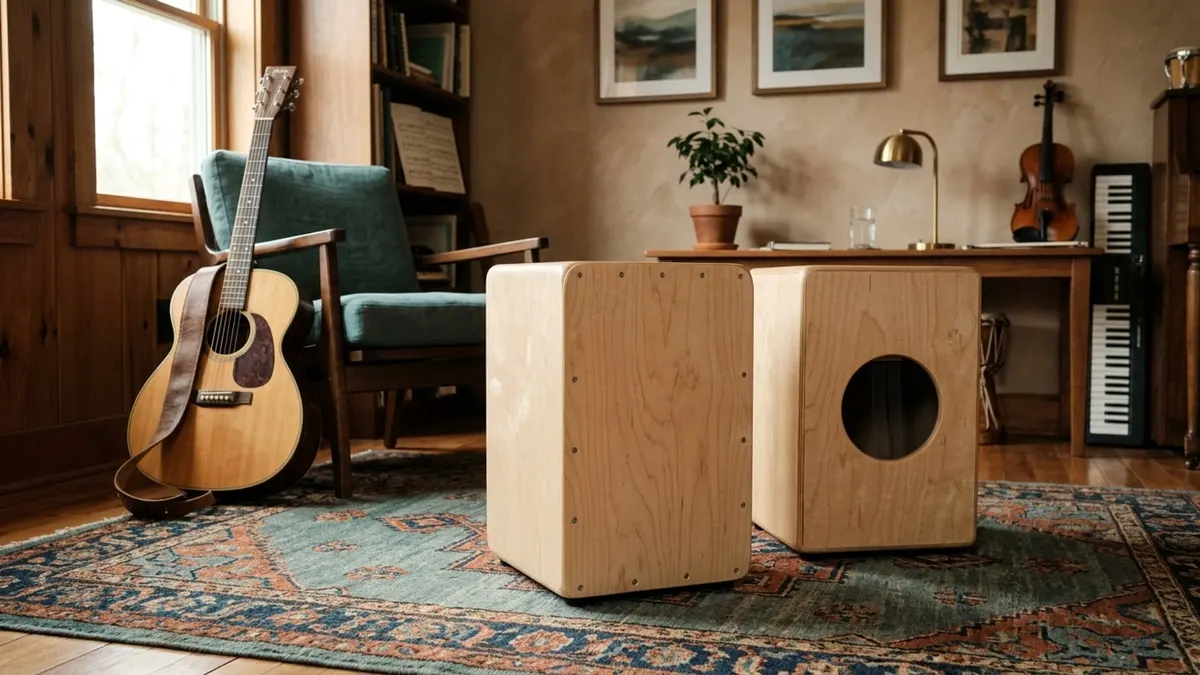
Best Cajons (2026): Snare and String Box Drums for Beginners and Players
Meinl's BC1 is our pick: a 12 by 17.25 inch Baltic birch box with two sets of steel snare wires, a rear sound port and a 2 year warranty.

Best Pickup and Bass Cajons (2026): Electric Cajons for the Stage
Meinl's PSC100B is our pick: three passive piezo pickups that need no batteries, volume and tone dials, and a full size Baltic birch body with snare wires.