
How to Tune a Djembe: Rope Diamonds and Key-Tuned Rods
How to tune a djembe: pulling diamonds on a rope-tuned drum, from X8 Drums' guide, and the crisscross key method Remo and Toca give for key-tuned djembes.

Affiliate disclosure: product links on this page go to Amazon or to the maker's own store. As an Amazon Associate we earn from qualifying purchases, at no extra cost to you; links to makers' own stores earn us nothing. No retailer or brand sees our picks before they are published or has any say in them. How we choose.
Djembes tune in one of two ways. A traditional djembe has a goatskin head held by rope, and you tighten it by pulling diamonds into the vertical ropes. A key-tuned djembe has metal rods and a wrench, like a conga. This guide covers both, using X8 Drums' rope-tuning guide, Remo's instructions for its Mondo djembes, and Toca's for its key-tuned drums.
How a rope djembe holds its tension
X8 Drums explains that a rope-tuned djembe has metal rings around the head, often hidden under the skin, with vertical rope runners threaded through them down the bowl of the drum. Tension on those runners is tension on the head. To tighten it, you pull, or form, diamonds by putting horizontal knots across pairs of vertical runners. X8 Drums says this is called a Mali Weave, and players also call it pulling diamonds.
Pulling a diamond, step by step
- Find the spare rope. X8 Drums says it is usually wrapped around the drum or tied into a handle, and marks where the last diamond was made, so start there.
- Pick the next two vertical laces beside it.
- Pass the spare rope under both laces, then bring it back and under the first lace again.
- Pull. A diamond shape forms as the two laces draw together. Pull down to keep the diamonds even.
- Repeat around the drum as needed, then tie off the end of the rope.
If there is no spare rope at all, X8 Drums says the whole rope system needs replacing with longer rope, usually a job for a professional, though it adds that spare rope is sometimes woven into the existing ropes and easy to miss.
How much is enough
X8 Drums is blunt about the main risk: do not be tempted to pull just one more diamond, since too much tightening breaks the skin and the drum then needs a new head. For a first try it suggests pulling one or two diamonds, undoing them and practicing again. For a drum that has never been tuned, X8 Drums suggests stopping after a few diamonds and adding knots every 10 days for two months, since the skin needs time. Minor tuning can be anywhere from one to a dozen knots.
It also names the opposite mistake as the most common one: not pulling hard enough, so the diamonds are loose and add little tension. Gloves help, and an instructor showing how hard to pull makes a real difference, X8 Drums says.
Signs a djembe needs tuning
X8 Drums names the symptom: a weak or wobbly bass with poor decay. A drum like that may need more than a few knots; X8 Drums says it can take weaving around the head up to four times, and that if that makes no difference, something in the method is wrong and a video or an instructor will help. A well-tuned head gives a clear bass in the center, a ringing tone near the edge and a sharp slap (our reading). Listen to all three before and after each new diamond.
Djembes that arrive tuned
Meinl says its HDJ3-L and HDJ4 djembes ship pre-tuned, with high-strength nylon ropes pre-stretched so the drum holds its pitch from the start. That spares a new owner the slow first weeks of tightening.
Tuning a key-tuned djembe
Remo says its Mondo key-tuned djembes are tensioned to play right out of the box, and that the looser the head, the lower the tone, and the tighter, the higher. To tune one, Remo uses a crisscross pattern: starting at rod number 1, give a whole turn clockwise and work across the drum point by point, repeating as needed; once you feel resistance, switch to half turns. Check the pitch by tapping the rim over each tuning point and match it all round.
Toca's instructions for its key-tuned djembes use half turns from the start, going round the drum from its logo, until the pitch is high and focused with no ring on an open tone, and say to check the head's collar for even tension.
Replacing a synthetic head
Remo's steps for a Mondo head: loosen the rods in a crisscross pattern, remove the rods, washers and claw hooks, lift off the old head and wipe the bearing edge. Set the new head with Remo's crown logo opposite the drum's front badge, refit the hardware, finger-tighten in a crisscross, then tune. Remo says a new Mondo head starts with a 90 degree edge that forms a bevel over the bearing edge as tension comes on, that the head stretches over its life, and that it is time to replace it when the claw hook reaches the arrow on the tuning bracket.
Taming the ring
Remo sells a sound control pack for its key-tuned djembes: a 1 inch foam dot under the head off to one side subtly reduces overtones, a 4 inch dot in the center lowers the fundamental slightly and adds focus, and a 5.5 inch ring cuts resonance; all three together give the driest sound. See the djembe guide for drums.
After playing
Toca recommends loosening a key-tuned head a half turn per nut after playing, and rubbing a little lanolin hand lotion into a skin head once tuned. Rope djembes are not slackened after each session (our reading); keep them away from damp, cold and fast temperature swings, as Latin Percussion advises for all wooden drums. A padded bag from the bag guide helps in transport, and key-tuned congas and bongos follow the same rules, covered in the conga and bongo tuning guide.
Frequently asked questions
How do you tighten a rope djembe?
By pulling diamonds: X8 Drums says to pass the spare rope under two vertical laces, back under the first, and pull until a diamond forms, then repeat and tie off.
How many diamonds should I pull?
X8 Drums says there is no ideal number; minor tuning can be one to a dozen knots. It warns not to pull just one more, since too much tightening breaks the skin.
How do I tune a key-tuned djembe?
Remo's method is a crisscross pattern with the key: whole turns until you feel resistance, then half turns, tapping over each tuning point to match the pitch all round.
Why does my djembe sound flat and weak?
It may be too loose. X8 Drums says the most common mistake is not pulling the rope hard enough, so the diamonds add little tension to the head.
Do new djembes need tuning?
Some arrive tuned: Meinl pre-stretches the ropes on its HDJ djembes, and Remo says its Mondo djembes play out of the box. Toca's djembes need tuning on arrival.
When should I replace a Remo djembe head?
Remo says the head stretches over its life, and when the claw hook reaches the arrow mark on the tuning bracket it is time for a new head.
Sources
- How to Rope-Tune a Traditional Djembe, X8 Drums
- How to: Mondo drumhead replacement and tuning, Remo
- Djembe Sound Control Pack Instructions, Remo
- Tips and Advice: tuning and maintenance of congas, bongos, timbales and djembes, Toca Percussion
- Frequently Asked Questions, Latin Percussion
Related guides
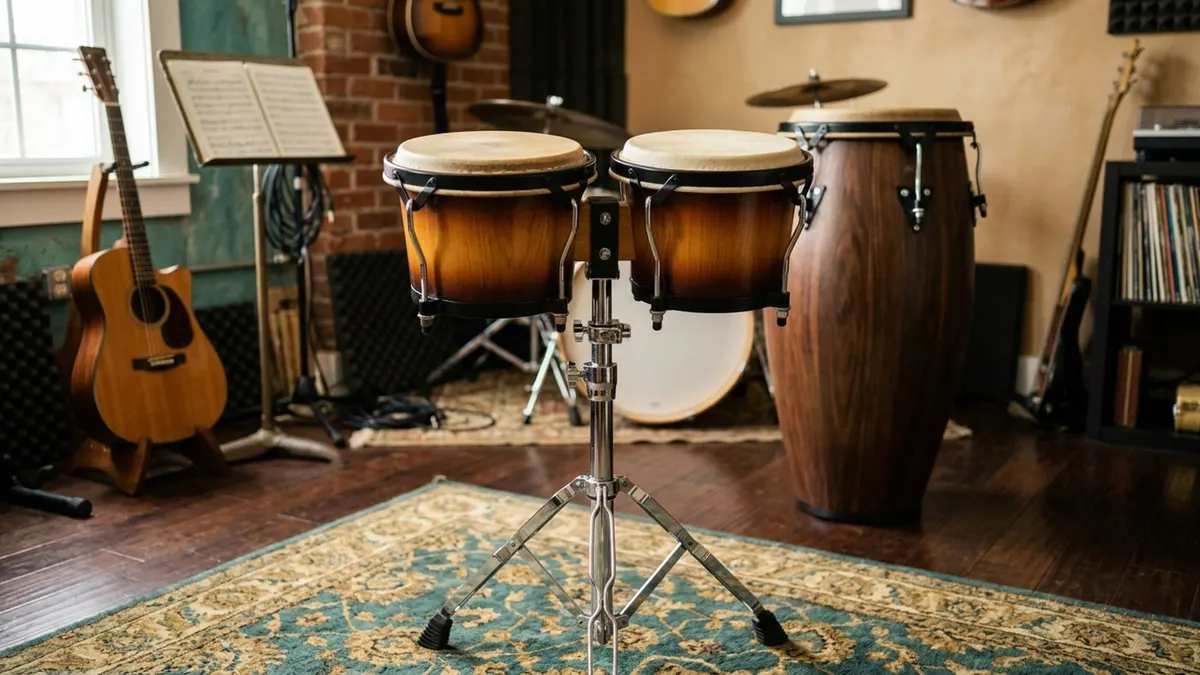
Best Bongos (2026): Wood and Synthetic Pairs Compared
Meinl's HB100VSB is our pick: 6.75 and 8 inch buffalo rawhide heads on solid hardwood staves, a tuning wrench and a 2 year warranty.
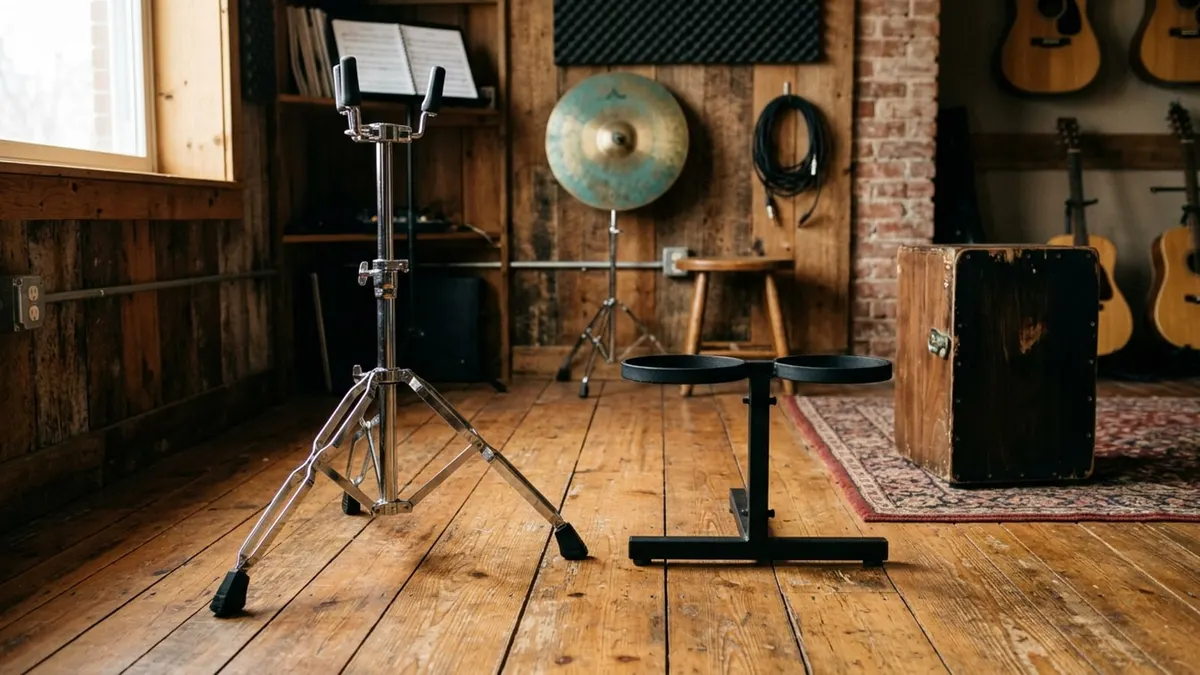
Best Conga and Bongo Stands (2026): Standing and Seated Heights
Gibraltar's 9517 is our pick for a pair of congas: double braced, 25 to 42 inches tall, adjustable shell supports for 11 to 12.5 inch drums and a 5 year warranty.
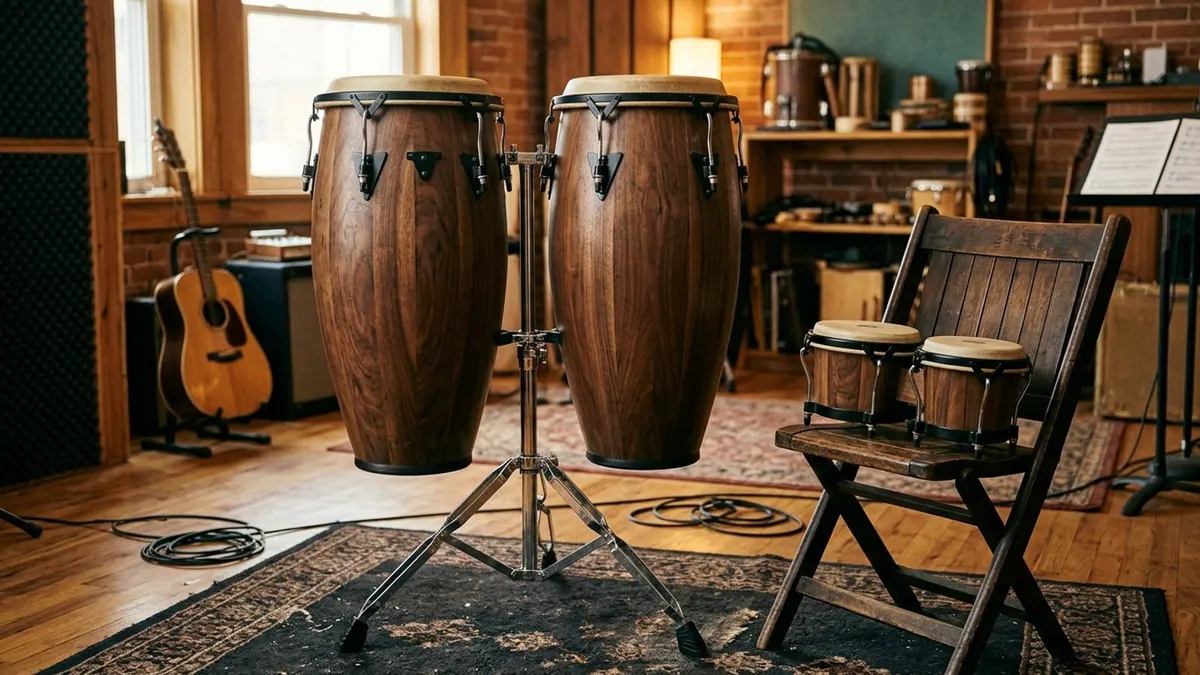
Best Congas (2026): Conga Sets With Stands, From First Pair to Stage
LP's Discovery II is our pick for a first pair: 10 and 11 inch rawhide heads on 28 inch ultralight shells, EZ Curve rims and a light double stand in the box.